
Safety
How to Avoid Car Hire Scams in Ghana
Quick answer: The most common risks when hiring a car in Ghana are fake "drivers" at the airport, deposits sent to unverified WhatsApp or Instagram sellers, hidden extras added at the kerb and unclear insurance. Protect yourself by booking only with a business you can verify (a real address, reviews and a working landline or website), getting the total price, deposit and cancellation terms in writing, confirming your driver's name, photo and plate before landing, and never paying the full amount up front to someone you have only met online.
Most Ghanaian car hire firms are honest, hard-working family businesses. A small number of bad actors, though, target visitors, especially diaspora travellers booking from abroad during peak season. Here's how to book with confidence.
Scam 1: The fake airport driver
The UK Foreign Office warns that "British nationals have been robbed by impostors who have approached them around the main arrivals area pretending to be their driver".
How to avoid it:
- Get the driver's name, photo, phone number and plate in advance.
- Use a code word or your booking reference on the name board.
- Ask for ID before you hand over any luggage, as the FCDO recommends.
- Don't follow anyone who says your driver "sent them".
Secure Travel and Tours also warns about pop-up "agents" at the airport offering taxis at inflated rates.
Scam 2: The deposit that disappears
The pattern is a car advertised at a tempting price on social media, a request for a deposit by mobile money or bank transfer, and then silence.
How to avoid it:
- Verify the business. Look for a physical address you can find on Google Maps, consistent reviews over time, and a website or registered company name.
- Video-call the firm and ask to see the actual vehicle with today's newspaper or a handwritten note showing your name.
- Pay a modest deposit, not the full sum, and use a method that leaves a trail.
- Be wary of prices far below the market. KAYAK's Accra small-car average is around $72/day (checked October 2026), so a large SUV offered at half that deserves questions.
Scam 3: Hidden charges at the kerb
A low headline price is quoted, then fuel, the driver's lunch, "airport fees" and overtime are added on the day.
How to avoid it:
- Ask for a written, itemised quote: driver, fuel, distance limit, hours, overtime, tolls, parking and the driver's overnight allowance.
- Look for firms that publish their extras. Transparent Rentals, for example, publishes a $0.50/km rate beyond its allowance. We cite it as an example of transparency, not as an endorsement.
- Confirm the currency, because a "140" quoted in dollars and one in cedis are very different.

Scam 4: Damage disputes on return
How to avoid it:
- Take a timestamped video walk-around at pickup, covering bodywork, tyres, windscreen, interior, fuel level and odometer.
- Note every existing scratch on the paperwork and get it signed.
- Ask how the security deposit is refunded and when.
Scam 5: Unclear or missing insurance
KAYAK notes that the level of insurance protection "can differ substantially" between providers in Accra.
How to avoid it:
- Ask whether the vehicle has valid insurance and roadworthiness documents, and see them.
- Ask what the excess is, in writing.
- Check whether your travel insurance or credit card covers rental excess in Ghana.
A note on fraud against operators
Fraud runs both ways. In April 2025 Ghanaian media, including Citi Newsroom, reported that police had arrested a suspect linked to a vehicle-rental fraud syndicate that allegedly used forged documents to hire and then steal cars. This is why reputable firms may ask you for ID, a deposit and your licence details. That's a good sign, not a red flag.

Red flags at a glance
- Will only communicate by WhatsApp, with no address or landline
- Asks for full payment up front by mobile money
- No reviews, or a burst of brand-new reviews
- Refuses a video call to show the car
- Price far below the market
- Pressure to "pay now or lose the car"
When the brand on the sign isn't the brand you think
Scams aren't always about fake firms. Sometimes it's about who you're really dealing with. In Ghana, as elsewhere, international car hire names are often run locally under licence or as agencies. That's normal. But it can cause confusion when something goes wrong.
On KAYAK's Accra page, one reviewer in November 2025 complained that a provider trading under an international name "claimed to be independent" from that brand when a dispute arose. We can't verify that review, and we're not suggesting anything about the firm involved. The lesson is broader, though. Before you pay, ask exactly which company holds your contract, whose terms apply, and who you complain to if things go wrong. Get the company's registered name on your paperwork.
How to verify a firm in ten minutes
You don't need to be an investigator. Most of the checks below take a couple of minutes each, and together they filter out the vast majority of problems.
Search the phone number. Paste the WhatsApp number into Google. A genuine business usually shows up on its own website, a Google Maps listing or a business directory. A number that only appears in one Instagram post is a warning sign.
Find it on a map. Look for a physical address with photos, ideally from customers rather than the business itself. Check that the reviews talk about cars and drivers. In our own directory research, one firm's map reviews talked about rooms and food, which tells you the listing isn't what it seems.
Read the reviews over time. A long trickle of reviews over several years is more reassuring than thirty five-star reviews posted in the same week. Read the one- and two-star reviews too. How a firm responds to a complaint says a lot.
Check the website properly. Is it live, with a working booking form? In our research we came across firm websites that were parked or half-built, and one where reviews complained that web bookings were ignored. That doesn't make those businesses dishonest, but it does mean you should confirm your booking by phone.
Video-call. Ask the firm to show you the actual car on a short video call. A genuine operator with a car in the yard will usually say yes without fuss.
Ask for a written quote. Get the total price, currency, inclusions, deposit and cancellation terms in one message you can screenshot.

Paying safely
Most Ghanaian firms take mobile money (MoMo), bank transfer or card, and many diaspora customers pay a deposit from abroad. A deposit is reasonable, especially in December when a firm is turning other customers away to hold your car. The question is how much, and to whom.
Keep the deposit proportionate. A fraction of the total is normal; the full amount weeks in advance to a business you've never verified is not. Pay into an account in the business's name, not a personal account belonging to "the manager's brother". And keep every receipt and message. If something does go wrong, a clear paper trail is what your bank or the police will ask for.
A useful related point from the FCDO is aimed at friends and family. It warns that scams targeting visitors to Ghana take many forms, and advises telling relatives back home to be sceptical if they're asked to send money on your behalf. Agree a way to confirm any such request with you directly.
At the handover
Even with a reputable firm, the handover is where small disputes start. Spend ten unhurried minutes on it.
Walk round the car with the firm's representative and film it, narrating any damage as you go. Check the tyres, including the spare, and make sure the jack and wheel brace are actually in the boot. Photograph the fuel gauge and the odometer. Ask to see the insurance and roadworthiness documents; the Ministry of Roads and Highways' Ghana Drivers' Guide notes that police at checkpoints may ask for the roadworthiness certificate, so you'll want it in the car anyway.
If you've hired a driver, check they're the person you were told to expect. Same name, same face as the photo, same plate.
If something goes wrong
If you think you've been scammed, stop paying, save everything (screenshots, receipts, numbers, the advert) and report it to the Ghana Police Service. Tell your bank or card issuer quickly; the sooner they know, the better your chance of recovering a card payment.
British nationals can contact the British High Commission in Accra, and US citizens the US Embassy (+233 (0)30 274 1000, according to the State Department). Neither can recover money for you, but they can advise on local procedures.
And if a deal feels off, walk away. There are plenty of honest firms in Ghana that would be delighted to have your booking.

Questions to send before you book
Copy these into WhatsApp and send them to any firm you're considering. A genuine operator will answer all of them without hesitation. If you get vague replies or pressure to pay first and ask later, that tells you something.
- What is your registered business name, and what is your office address?
- Which exact vehicle will I get? Can you send a recent video of it?
- What is the total price, in which currency, and what does it include?
- What is the fuel policy and the distance allowance?
- What insurance does the car have, and what is the excess if it's damaged?
- How much is the deposit, which account does it go to, and how is it refunded?
- What is your cancellation policy?
- For a chauffeur: what is the driver's name, and when will you send their photo and the plate number?
Pay attention to how a firm reacts, too. A business that's happy to answer, sends a proper quote and doesn't rush you is showing you how it'll behave if anything goes wrong mid-trip. That's worth more than a few dollars off the daily rate.
Why a directory helps (and its limits)
We built GhanaCarHire because it's hard to tell a solid local firm from a slick Instagram account at 4,000 miles' distance. Our listings are checked against public information: websites, map listings, reviews and contact details. We flag where something doesn't add up.
But no directory can guarantee every booking. Use our listings as a starting point, then do the checks above yourself. Between the two, you'll be in a far stronger position than someone booking the first number that replies on social media.
Frequently asked questions
How do I know if a Ghanaian car hire firm is legitimate?
Check for a verifiable address, a long review history, a business website or registration, and a willingness to video-call and put terms in writing.
Should I pay a deposit before arriving in Ghana?
A modest deposit is normal, especially in December. Avoid paying in full in advance to anyone you can't verify.
What should I do if someone at Accra airport says they're my driver?
Ask for ID and check their name and plate against your booking confirmation, as the UK FCDO recommends. If in doubt, call your firm directly.
Is it safe to book car hire through Instagram in Ghana?
Many genuine firms sell through Instagram and WhatsApp, but verify them independently before sending money.
What should I photograph when collecting a hire car?
All four sides, the wheels and tyres, the windscreen, the interior, the fuel gauge and the odometer, with timestamps.
Book with more confidence
Every firm on GhanaCarHire is checked against its public information before listing. Browse firms in Accra, or go straight to airport transfers, chauffeurs and self-drive.
Information checked 13 October 2026.
Sources (7)
- gov.uk/foreign-travel-advice/ghana/safety-and-security
- securetravelandtours.com/blog/detty-december-ghana-2026-complete-guide/
- kayak.com/Cheap-Accra-Car-Rentals.20768.cars.ksp
- transparentrentals.com/
- citinewsroom.com/2025/04/police-arrest-suspect-in-nationwide-vehicle-rental-fraud-syndicate/
- mrh.gov.gh/wp-content/uploads/2022/09/Ghana-Drivers-Guide-_Final_Signed.pdf
- travel.state.gov/en/international-travel/travel-advisories/ghana.html
Related guides
 Airport
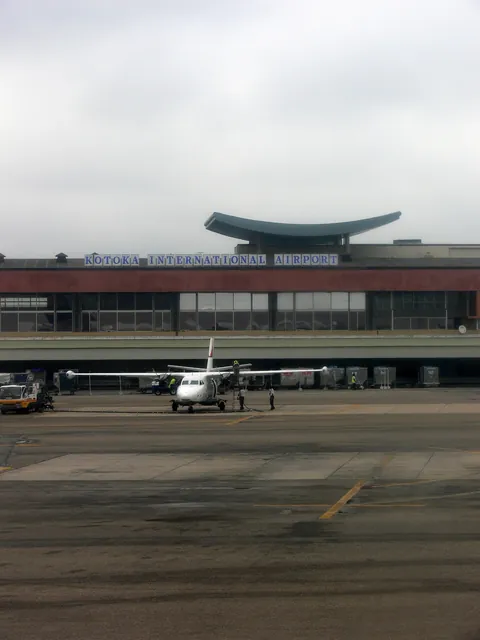
Accra (Kotoka) International Airport Arrival & Pickup Guide
Landing at Accra (Kotoka) International Airport? How arrivals work, how to meet your driver safely, and transfer prices. Checked Oct 2026.
 Road trips
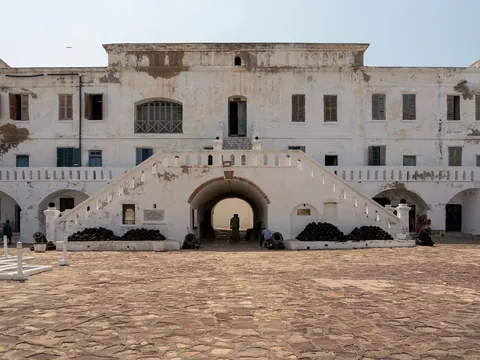
Accra to Cape Coast Road Trip: Route, Timings, Stops & Car Hire
Plan an Accra to Cape Coast road trip: 165 km, 2.5–3.5 hours, Kasoa traffic tips, castles, Kakum and car hire prices. Checked Oct 2026.
 Road trips
Accra to Kumasi Road Trip: The N6 Route, Rest Stops & Car Hire
Driving from Accra to Kumasi? About 250 km on the N6, 4–6 hours. Rest stops, safety tips, flights versus driving, and car hire costs.