Safety
Is It Safe to Drive in Ghana? Self-Drive Safety for Visitors
Quick answer: Yes, an experienced, confident driver can drive safely in Ghana, but it is harder than at home and the official advice is cautious. The US State Department says driving in Ghana "can be very dangerous due to road conditions, unpredictable and aggressive driver behavior, and poorly maintained vehicles", and calls night travel outside the major cities "extremely dangerous". The UK FCDO advises avoiding road travel outside the main towns after dark. If you self-drive: travel in daylight, keep doors locked and windows up, carry your original licence plus a 1949 International Driving Permit, and expect police checkpoints. For long highway runs or a first visit, a car with a driver is the lower-risk choice. (All advice checked 15 October 2026.)
Is it safe to drive in Ghana? It is one of the first questions people ask before booking self-drive car hire, whether they are tourists, NGO staff, students, business travellers or Ghanaians coming home. This guide sets out what UK and US government travel advice and Ghana's own road authorities actually say, so you can decide with the facts in front of you.
It is about safety on the road. If you are still choosing between driving yourself and hiring a driver, read self-drive or chauffeur in Ghana. For the paperwork (licence, IDP, the 90-day rule and insurance), see driving in Ghana with a UK or US licence.
What the official travel advice says
Neither the UK nor the US government tells visitors not to drive in Ghana. Both urge caution, and both are specific about where and when.
UK Foreign Office (FCDO)
The FCDO's Ghana page (checked 15 October 2026) says:
- Roads "can be in a poor condition, particularly in rural areas".
- Grass or leaves strewn in the road often mean there is an accident or other hazard ahead.
- Street lighting is "poor or non-existent". Avoid travelling by road outside the main towns after dark, when the risk of serious accidents is much greater and there is a heightened risk of attacks on vehicles.
- If you drive at night, be aware of impromptu police checkpoints, and do not give cash to the police, as this can be perceived as a bribe.
- Attacks on vehicles are increasing, sometimes involving weapons. Take particular care when your car is stationary in a busy area, and keep windows up and doors locked.
US State Department
The State Department's Ghana page (advisory issued 7 July 2026, Level 2: exercise increased caution) adds:
- Main roads in major cities are generally paved and in good shape. Secondary roads and many roads outside major cities are mostly in poor condition.
- Many accidents occur on the Accra–Cape Coast and Accra–Kumasi highways.
- Many intersections have no stop signs and traffic lights are routinely out of service, so crossing "depends largely on defensive driving techniques and patience".
- Motorcycles often lane-split and pass on the left, and can cause collisions when a car turns left.
- US Embassy staff are not allowed to travel at night outside major cities.
What Ghana's own road safety figures show
Ghana's National Road Safety Authority (NRSA) is clear that crashes are a serious problem. In October 2026 the Ghana News Agency reported NRSA figures of at least 1,009 deaths in 4,899 crashes nationwide between January and April 2026, with crashes up 2.5% on the same period in 2025. The NRSA's Director-General warned drivers against speeding, reckless driving and ignoring road signs ahead of the festive season.
There is some better news. On 15 October 2026 the Ghana News Agency reported preliminary September figures, given by the Police Motor Traffic and Transport Department (MTTD), showing road deaths down 7.82% on a year earlier. The MTTD attributed the fall partly to targeted enforcement. Since 10 September, the police have also been issuing caution notices to speeding drivers, backed by video evidence.
Road conditions: what to expect
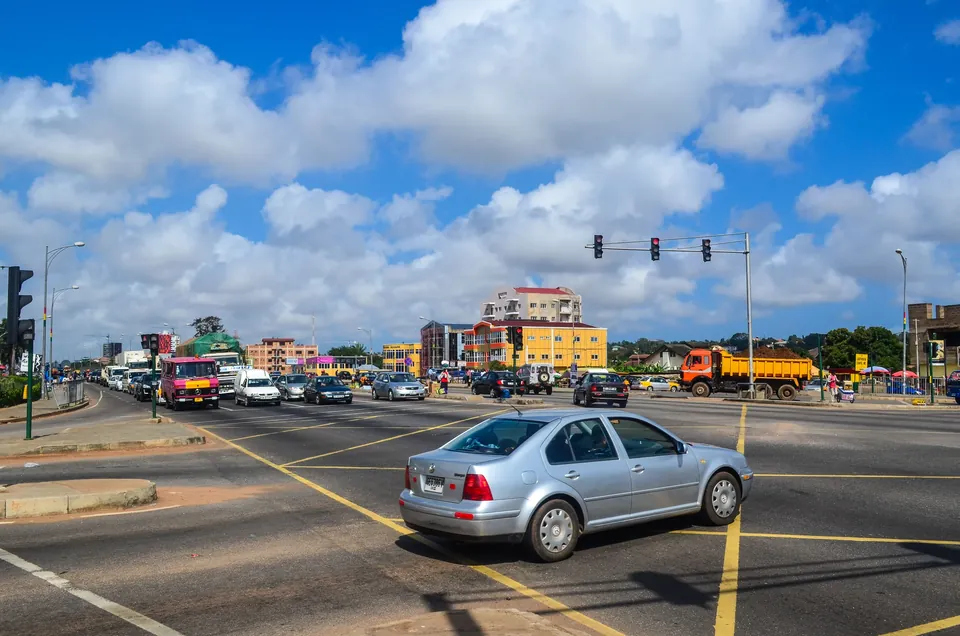
In Accra, Kumasi and other cities, the main roads are mostly paved. Expect heavy traffic, junctions where the lights are out, motorbikes weaving between lanes, and street sellers walking between stationary cars.
Outside the cities the picture changes. The FCDO and State Department both describe many rural and secondary roads as poor. In practice, that means potholes, missing markings, unlit stretches and pedestrians, cyclists and animals on or beside the carriageway.
A few things worth knowing before you set off:
- Ghana drives on the right. UK, Irish, Australian and South African drivers should take extra care at roundabouts and when overtaking.
- Watch for leaves or grass in the road. The FCDO notes this often means there is a crash or hazard ahead.
- Rainy season flooding. The FCDO says heavy rain can flood roads in Accra and its surroundings, and flooding is common in the Upper West, North East, Northern and Savannah regions from March to November. Conditions can change quickly.
- Harmattan. The State Department says the dry, dusty Harmattan winds (roughly November to March) reduce visibility.
- Your sat-nav is not a safety check. The State Department advises researching the route your GPS suggests, because "the fastest path may not be the safest".
Speed limits
The Ministry of Roads and Highways' Ghana Drivers' Guide lists the general limits under the Road Traffic Regulations 2012 (LI 2180), where no sign says otherwise:
| Where | Limit |
|---|---|
| Near schools, playgrounds, health facilities, places of worship, markets, or where human activity is dominant | 30 km/h |
| Urban areas | 50 km/h |
| Roads outside urban or built-up areas (not motorways) | 90 km/h |
| Motorways | 100 km/h |
The guide adds that drivers are expected to go slower than the limit where the road conditions call for it.
Night driving: the single biggest risk
If you take one thing from this guide, make it this: plan your self-drive days so you are off the highways before dark.
The reasons are spelled out in the official advice. The State Department says night travel outside major cities is "extremely dangerous due to poor street lighting and the unpredictable behavior of pedestrians, bicyclists, and animals", and that robberies on highways are of particular concern, especially at night. It names the Bole–Wa and Kintampo–Tamale highways, and minor roads in parts of several regions, as places where robberies have increased.
The FCDO's advice for longer trips outside major cities is to:
- travel during daylight hours
- travel in a convoy of at least two vehicles
- get advice from local police
- not stop if people at the roadside try to flag you down
If a long drive is running late, stopping overnight is more in line with that advice than pushing on after dark.
Crime affecting drivers
The official advice describes some specific risks to people in cars:
- Stationary traffic. The State Department says "snatch and grab" thefts happen from vehicles idling in traffic. The FCDO lists Accra roads where police have highlighted risks to vehicles, including Graphic Road, the George Walker Bush Highway, the Accra Mall roundabout, the Teshie–Nungua road, the Pokuase–Amasaman road and the GIMPA road area.
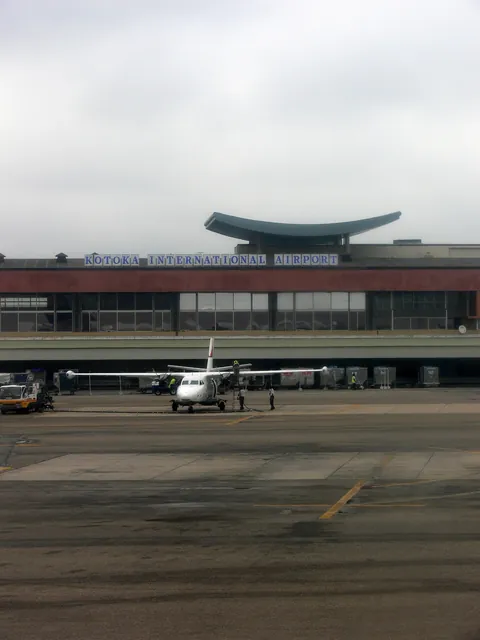
- Leaving the airport. The State Department warns that armed robbers sometimes target vehicles coming from Accra International Airport (formerly Kotoka). Don't plan to collect a self-drive car and head off on a long journey late at night.
- Staged bumps. The State Department warns that scammers may deliberately bump into vehicles, pretend to be hit, and demand money, mostly in congested urban areas.
- Roadblocks. It also notes that criminal groups may use blockades to slow down or stop vehicles, usually at night and in remote places.
- The far north. The State Department advises reconsidering travel to the northern border areas of the Upper East, North East and Upper West regions, and to areas west of the N12 in the Savannah Region, citing highway robbery and carjacking. Check both governments' regional advice before any trip north.
The FCDO's simple rule applies everywhere: keep windows up and doors locked, especially when stopped. Keep bags and phones out of sight, not on the passenger seat.
Police checkpoints
You will almost certainly be stopped. The State Department says travellers "are routinely stopped at police checkpoints throughout Ghana", and that vehicles and passengers may be searched. The Ministry of Roads and Highways explains that the Ghana Police Service, Immigration and Customs run fixed and mobile checkpoints to guard against road crime.
According to the Ghana Drivers' Guide, at police checkpoints officers may check:
- your driving licence and International Driving Permit
- your national ID card or passport
- the vehicle's roadworthiness certificate
- an ECOWAS Brown Card (the regional third-party insurance card for vehicles crossing borders)
The same guide says traffic police (MTTD) officers wear a white tunic with blue or blue-black trousers, with a name tag, the MTTD badge and a police badge showing their service number. If you need to complain about an officer's conduct, the guide says you can report them to the Police Intelligence and Professional Standards Bureau, quoting their number and rank.
On money, the advice is consistent. The FCDO says not to give cash to the police, as this can be seen as a bribe. The State Department says the likelihood that officers will ask for a bribe is "very high". The Ghana Drivers' Guide says never to pay money to a police officer to close an accident case. Stay polite, hand over your documents, and ask calmly about the official procedure for any fine.
What to carry in the car
Put these together in one folder before you leave the rental office:
- Your original driving licence. The Ghana Drivers' Guide says all drivers must carry their original licence (LI 2180, Regulation 47).
- A 1949 International Driving Permit. GOV.UK lists the 1949 IDP for Ghana, and the FCDO says you can drive on a 1949 IDP or a Ghanaian licence. Citi Newsroom reports that visitors can drive this way for up to 90 days.
- Proof of identity and immigration status. The State Department says to carry documentation such as your passport and visa. The FCDO says a copy of your passport photo page is acceptable ID, with the original kept somewhere safe such as a hotel safe.
- The car's papers. Ask the hire firm to show you where the roadworthiness certificate and insurance documents are kept in the car, and check they are in date.
- The rental agreement, showing what the insurance covers and your excess.
- The firm's 24-hour number, saved in your phone and written on paper.
The Ghana Drivers' Guide also lists safety equipment every vehicle should carry: two warning triangles, a first aid box, a fire extinguisher and a spare tyre in good condition. Check they are in the boot before you drive away. If they're missing, ask for them.
Insurance
Ask the hire firm, in writing, what the insurance covers, what your excess is, and what you must do after a crash. Then check that your own travel insurance covers you as a driver of a hire car in Ghana. The State Department also strongly recommends insurance that covers medical evacuation, noting that emergency medical services are limited outside Accra.
On the road: rules that keep you safe
The Ghana Drivers' Guide lists what drivers should do and avoid. The ones that matter most for visitors:
- Wear seat belts and make sure passengers do too. Failure to use seat belts carries a fine of 10 to 50 penalty units under LI 2180.
- Don't use your phone while driving. The guide lists use of a communication device as an offence (50 penalty units).
- Don't drink and drive, and don't drive tired.
- Don't park or stop on the carriageway or hard shoulder unless you have to.
- Avoid driving in stormy weather.
The NRSA's latest warnings focus on speeding, and the police have begun issuing speeding caution notices backed by video evidence. Sticking to the limits keeps you safe and out of trouble.
If something goes wrong
After a crash
The State Department says that if another car hits yours, you should go directly to the nearest police station to report it. For emergencies, it lists 112, 191 or 18555 for police and 193 or 112 for an ambulance (checked 15 October 2026). It also warns that ambulance services are not widely available, and that it can be faster to take an injured person to the nearest major hospital by car or taxi.
The Ghana Drivers' Guide adds that you should:
- attend to anyone who is injured first
- place warning triangles at least 50 yards (about 45 m) before and behind the vehicle if it is blocking traffic
- report the crash at the nearest police station as soon as possible, and inform your insurer
- never agree an out-of-court settlement with the other party before the crash is reported to the police
Call the hire firm straight away too. Their insurer will need the police report.
Breakdowns
Get the car as far off the road as you safely can, put out the warning triangles (the guide says 45 m or 50 yards before and behind if it blocks traffic), and call the firm's 24-hour line.
When to choose a driver for safety
Self-drive can work well, especially if you already know Ghana's roads. Based on the official advice above, a car with a driver is the safer option when:
- you land at night and need to get from the airport to your hotel
- you are driving between cities, such as the Accra–Kumasi or Accra–Cape Coast highways the State Department highlights. Our Accra to Kumasi road trip guide covers that route
- your journey could run past dark
- you are heading north, where both governments give extra regional warnings
- it's your first visit and you haven't driven on the right, or in heavy, informal city traffic, before
A popular middle way is a driver for the airport run and the long highway legs, and self-drive for daytime trips around town. You can compare car hire with a driver in Accra or browse self-drive car hire & rental firms. Before paying any deposit, read how to avoid car hire scams in Ghana.
A quick self-drive safety checklist
- Daylight driving only outside the cities.
- Doors locked, windows up, valuables out of sight.
- Licence, IDP, passport copy and car papers in one folder.
- Warning triangles, first aid box, fire extinguisher and spare tyre checked.
- The firm's 24-hour number saved on your phone and on paper.
- Route checked in advance, not just followed on the sat-nav.
- Latest FCDO or State Department advice read the week you travel.
Frequently asked questions
Is it safe to drive in Ghana as a tourist?
It can be, if you are an experienced driver and follow the official advice. The US State Department says driving in Ghana "can be very dangerous" because of road conditions, aggressive driving and poorly maintained vehicles, and the UK FCDO advises against road travel outside main towns after dark. A sensible approach is to self-drive in daylight and use a driver for long or late journeys.
Is it safe to drive in Ghana at night?
It is the highest-risk time to drive. The State Department calls night travel outside the major cities "extremely dangerous", and the FCDO says the risk of serious accidents and attacks on vehicles is much greater after dark. Plan to finish long drives before nightfall.
What documents do I need at a police checkpoint in Ghana?
The Ministry of Roads and Highways' Ghana Drivers' Guide says police may check your driving licence and International Driving Permit, your ID card or passport, the vehicle's roadworthiness certificate and, for cross-border vehicles, an ECOWAS Brown Card. Carry your original licence at all times.
Should I pay police at a checkpoint?
No. The FCDO says giving cash to the police can be perceived as a bribe. Stay polite, show your documents, and ask about the official procedure for any fine.
Which side of the road does Ghana drive on?
The right. Take extra care at junctions and roundabouts if you normally drive on the left.
What should I do if I have a car accident in Ghana?
Help anyone injured, then call the police: the State Department lists 112, 191 or 18555 for police, and 193 or 112 for an ambulance. Report the crash at the nearest police station, inform the hire firm and its insurer, and don't agree any private settlement before it is reported.
What are the speed limits in Ghana?
Unless signs say otherwise, the Ghana Drivers' Guide lists 30 km/h near schools, markets and similar busy places, 50 km/h in urban areas, 90 km/h on other roads outside towns, and 100 km/h on motorways.
Is self-drive car rental in Ghana worth it?
For confident drivers staying in and around one city, it can be. For airport arrivals, long highway trips or anything that might run into the evening, the official advice points towards hiring a car with a local driver.
Sources
- Ghana travel advice: safety and security (checked 15 October 2026) (UK FCDO)
- Ghana International Travel Information (advisory issued 7 July 2026; checked 15 October 2026) (US Department of State)
- Ghana Drivers' Guide (Ministry of Roads and Highways)
- NRSA calls for greater discipline, accountability to reduce road crashes (6 October 2026) (Ghana News Agency)
- NRSA calls for improved emergency response to reduce road crash deaths (15 October 2026) (Ghana News Agency)
- Check if you need an international driving permit (GOV.UK)
- Explainer: How to get a driver's licence in Ghana in 2026 (17 April 2026) (Citi Newsroom)
Last checked: 15 October 2026. Rules, prices and advice change, so recheck official sources before you travel.
Related guides
 Safety
How to Avoid Car Hire Scams in Ghana
Fake drivers, deposit scams and hidden charges: how to spot car hire and car rental scams in Ghana and book safely. Official advice included.
Photo: Matti Blume, CC BY-SA 4.0